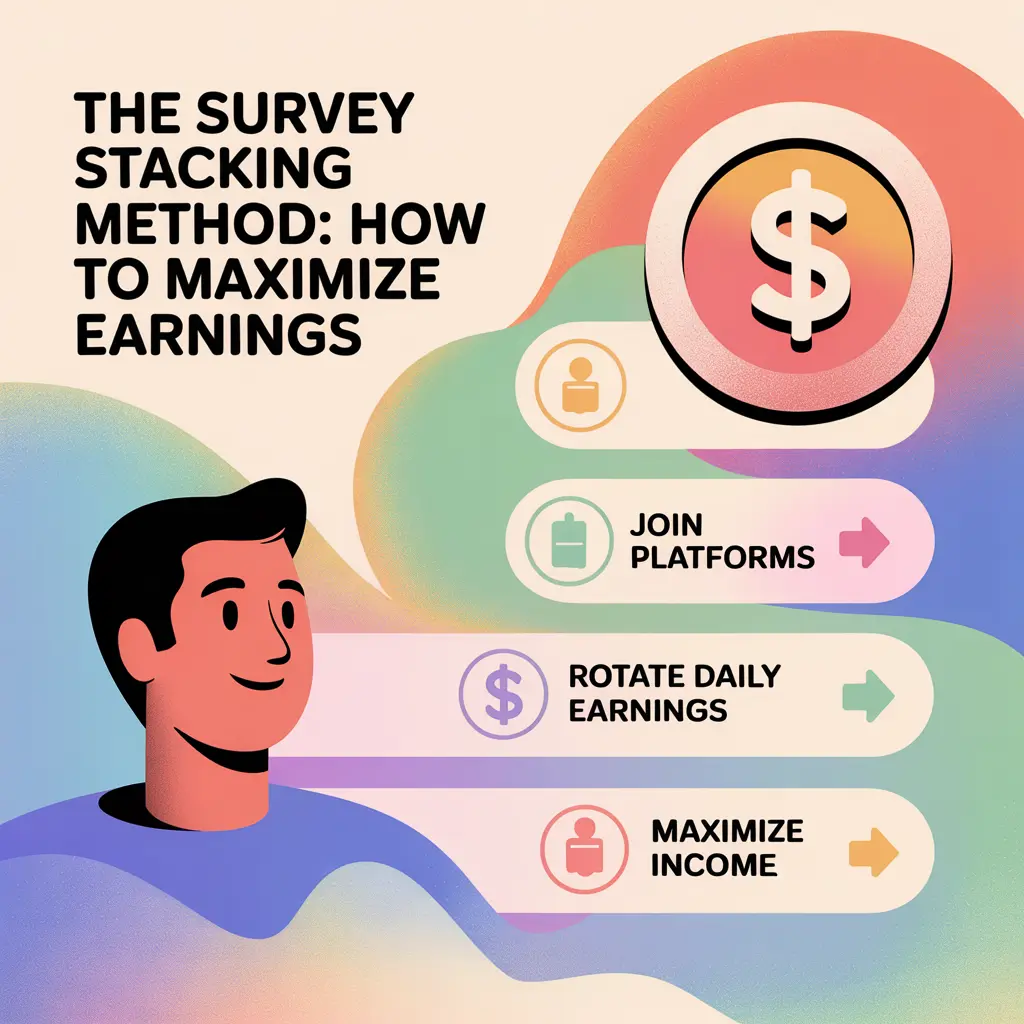
Most people don’t fail at surveys because surveys don’t work.
They fail because they approach it like a slot machine, log in, click a few surveys, get screened out, and log off frustrated. Repeat that enough times and you start believing the whole thing is a waste of time.
But here’s the truth: it’s not broken. The approach is.

The common mistake: relying on one survey site
The average beginner signs up for one platform, maybe Swagbucks or Survey Junkie, and expects it to deliver consistent opportunities.
It won’t.
Survey platforms are unpredictable by design. Availability depends on your demographics, timing, and demand. One day it’s full of surveys, the next day it’s dry.
Relying on a single platform is like relying on one customer for your entire business. When it slows down, your income stops.
The frustration loop: screen-outs, low pay, wasted time
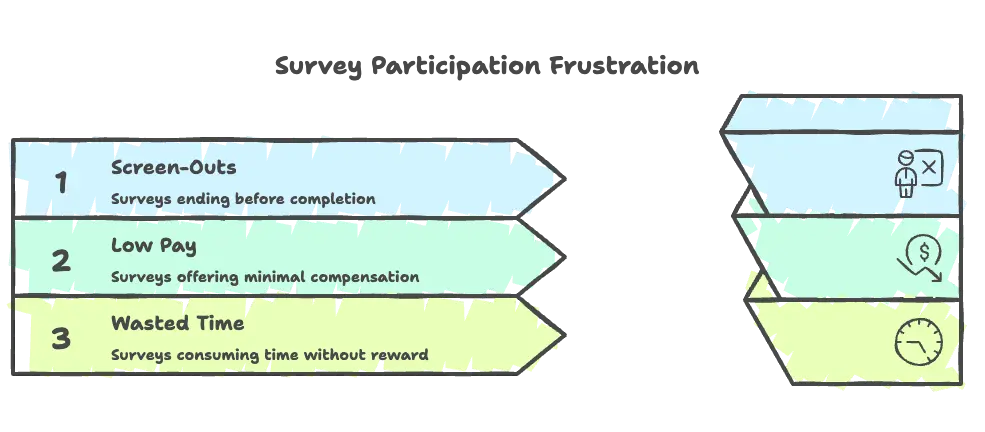
Here’s the cycle most people get stuck in:
- You click a survey
- You answer a few questions
- You get screened out
- You try another… same result
- Eventually, you find one that pays, but it’s $0.30 for 15 minutes
After a few sessions like that, motivation disappears. It feels like you’re working, but not earning.
That’s because you’re operating in a system that’s working against you.
The shift: treating surveys like a system, not luck
The breakthrough happens when you stop treating surveys as random opportunities, and start treating them like a structured income system.
Instead of asking:
“What surveys are available right now?”
You start asking:
“How do I stay in a position where I always have a paying option?”
That shift changes everything.
Introduce the concept of “survey stacking” as the solution
This is where survey stacking comes in.
It’s not about working harder. It’s about working smarter, layering multiple platforms together so you’re never stuck waiting, guessing, or wasting time.

Once you understand how to stack properly, surveys stop feeling like a gamble… and start behaving like a predictable side income stream.
What Is Survey Stacking?
At its core, survey stacking is simple, but powerful.
Simple definition of survey stacking
Survey stacking is the practice of using multiple survey platforms at the same time, rotating between them to keep a constant flow of available surveys and minimize downtime.
Instead of depending on one source, you build a stack of options.
Think of it like having multiple tabs open, when one dries up, you move to the next.
Why it’s different from casual survey taking
Casual survey takers wait.
They wait for surveys to appear.
They wait to qualify.
They wait to earn.
Stackers don’t wait, they rotate.
If a survey screens them out on one platform, they instantly switch to another. No dead time. No frustration spiral.
That one difference, eliminating waiting, is what separates people earning a few dollars a week from those pulling consistent monthly income.
Positioning it as a “stacked income layer”
Survey stacking isn’t meant to replace your main income.
It’s a layer.
A flexible, low-effort income stream that sits alongside other methods like:

- microtasks
- affiliate marketing
- content monetization
Individually, surveys might feel small. But stacked correctly, they become a reliable baseline, money that comes in consistently while you build bigger plays.
How it fits into a broader online income strategy
Smart earners don’t rely on one method.
They build income layers:
- High effort, high reward (business, content, affiliates)
- Medium effort (freelancing, digital services)
- Low effort (surveys, apps, passive tools)

Survey stacking lives in that low-effort layer, but it plays a crucial role.
It fills the gaps.
Idle time becomes earning time. Waiting turns into profit. And over weeks and months, those small wins stack into something real.
Why Survey Stacking Works (The Psychology + Math)
This isn’t just a “nice idea.” There’s real logic behind why stacking works, and why most people miss it.
Eliminates downtime
The biggest hidden cost in surveys isn’t low pay, it’s waiting.
Every minute you spend refreshing a page or getting screened out is unpaid time.
Survey stacking removes that completely.
When one platform slows down, you immediately switch. That keeps your session active and productive from start to finish.
Reduces reliance on one platform
No single survey site is consistent.
Algorithms change. survey availability fluctuates. demographics shift.
By stacking multiple platforms, you spread that risk.
If one platform underperforms, the others compensate. Your income becomes more stable, not because any one site is better, but because you’re not dependent on just one.
Increases earnings per hour
This is where the math kicks in.
Let’s say:
- Without stacking: you earn $2 in 1 hour (because of downtime and screen-outs)
- With stacking: you stay active the entire hour and earn $5–$8
Same time. Different system.
Your effective hourly rate increases, not because surveys pay more, but because you’re using your time more efficiently.
Compounds opportunities across platforms
Every platform has:
- different surveys
- different demographics
- different payout structures
By stacking them, you multiply your chances of:
- qualifying for surveys
- hitting higher-paying opportunities
- unlocking bonuses and streaks
It’s not linear, it compounds.
More platforms = more opportunities
More opportunities = more earnings
And over time, that difference becomes significant.
The Core Principles of Survey Stacking
This is where most people either level up… or stay stuck.
Survey stacking isn’t just “use more sites.” That’s surface-level advice. The real money comes from following a few non-negotiable principles that turn random clicking into a system that actually pays.
1. Use Multiple Platforms (Not Just One)
If you remember one thing, make it this:
One platform = inconsistent income.
Every survey site runs on its own supply of surveys, which means:
- Some days it’s full
- Some days it’s empty
- Some days you don’t qualify for anything
That’s not a bug, it’s how the industry works.
Smart stackers solve this by spreading across platforms like:
- Swagbucks
- InboxDollars
- Prolific
The goal isn’t to join everything. It’s to build a tight stack of 4–7 platforms that consistently give you options.
More options = less waiting.
Less waiting = more money.
2. Follow a Simple Rotation System
Most beginners waste time thinking instead of moving.
They sit on one platform, refreshing, hoping something appears.
Stackers don’t hope, they rotate.
A simple system looks like this:
- Open multiple platforms at once
- Start with the best-paying option
- If you get screened out - switch immediately
- If nothing’s available - move to the next platform
You’re not loyal to any platform.
You’re loyal to your time.
A good rhythm:
- Rotate every 15–20 minutes
- Or rotate instantly after a survey ends
This keeps your session flowing without friction.
3. Prioritize High-Paying Surveys
Not all surveys are worth your time.
This is where most people quietly lose money, they chase every survey instead of filtering.
Here’s the rule:
Always think in pay-per-minute, not total payout.
A $2 survey sounds good…
Until it takes 25 minutes.
A $1 survey that takes 8–10 minutes? That’s better.
As a rough benchmark:
- Aim for at least $0.50 per 10 minutes
- Ideally push toward $1 per 10–15 minutes
If a platform consistently falls below that, it doesn’t belong in your stack.
Discipline here is what separates casual earners from optimized ones.
4. Track Your Time and Earnings
Most people guess how much they’re earning.
Stackers know.
Tracking doesn’t need to be complicated. Just log:
- Platform used
- Time spent
- Amount earned
After a few days, patterns start showing:
- Which platforms pay best
- Which ones waste your time
- When surveys are most available
From there, you can cut the dead weight.
If a platform drags your hourly rate down, it’s gone.
This is how your stack evolves from “random sites” to a high-performing system.
5. Stack Rewards Strategically
Here’s a layer most people completely overlook.
It’s not just about how much you earn, it’s about how you use it.
Different platforms offer:
- PayPal cash
- Gift cards
- Bonuses and streak rewards
Smart stackers use this intentionally:
- Cash - bills, expenses
- Gift cards - groceries, Amazon, daily spending
- Bonuses - extra profit on top
This creates a subtle but powerful effect:
Your survey earnings start replacing real expenses, which makes every dollar feel more valuable.
The Bottom Line
Survey stacking works when you stop being passive and start being intentional.
- You choose your platforms
- You control your time
- You filter your opportunities
- You optimize your stack
At that point, you’re not just “doing surveys.”
You’re running a micro-income system that’s designed to pay.
The 4-Step Survey Stacking Framework
This is where everything clicks.
No more guessing. No more bouncing between apps hoping something works.
This is the exact system that turns survey stacking into something consistent, predictable, and actually worth your time.
Step 1: Define Your Rules
Before you even open a survey site, you need boundaries.
Because without rules, you’ll fall right back into random clicking.
Start with three simple decisions:
1. Your time budget
How long are you doing this daily?
- 30 minutes
- 45 minutes
- 1–2 hours max
Anything beyond that usually leads to burnout.
2. Your minimum pay threshold
This is your filter.
If a survey doesn’t meet your standard, you skip it, no exceptions.
A solid baseline:
- Minimum: $0.50 per 10 minutes
- Target: $1 per 10–15 minutes
3. Your platform limit
Too many platforms = chaos.
Too few = limited opportunities.
Sweet spot:
- 4–7 platforms active at once
These rules turn surveys from “whatever shows up” into a controlled system.
Step 2: Build Your Stack (Layer System)
Now you build your actual earning engine.
Think of your stack in layers:
Level 1: Core Platforms (Your Money Makers)
These are your highest-paying, most consistent platforms.
Examples:
- Prolific
- InboxDollars
These should make up the majority of your earnings.
Level 2: Filler Platforms (Keep You Moving)
These fill the gaps when your core platforms are slow.
Examples:
- Swagbucks
- Branded Surveys
They may not always pay the best, but they keep your session active.
Optional Level 3: Bonus / Experimental Platforms
These are:
- New platforms you’re testing
- Bonus-heavy sites
- Limited-time opportunities
You don’t rely on them, but they can boost your overall stack.
Step 3: Follow a Daily Routine
This is where most people fall apart.
Consistency beats intensity here.
A simple daily flow:
1. Open your full stack
- 4–7 platforms ready
- Tabs open or apps loaded
2. Start with the best opportunity
- Highest pay-per-minute first
- Don’t overthink it
3. Rotate fast
- Screened out? - Switch immediately
- Survey ends? - Move on
- No surveys? - Next platform
No waiting. No refreshing for minutes at a time.
4. Work in focused blocks
- 30–60 minute sessions
- Stay locked in, then stop
This keeps your energy high and your earnings efficient.
Step 4: Track, Analyze, and Trim
This is the step that separates casual users from optimized earners.
At the end of each session (or day), log:
- Time spent
- Earnings
- Platforms used
After a week, you’ll start seeing the truth:
- Which platforms actually pay
- Which ones waste time
- When you earn the most
Then you adjust.
Every month:
- Cut the lowest-performing platforms
- Double down on the best ones
- Test 1–2 new options if needed
Your stack becomes sharper over time.
Less noise. More profit.
The Real Power of This Framework
Most people treat surveys like random clicks.
This framework turns it into:
- A routine
- A system
- A repeatable income process
You’re no longer hoping to earn.
You’re engineering it.
Best Survey Stacking Setup (Beginner - Advanced)
Not everyone should run the same stack.
If you try to jump straight into an advanced setup, you’ll burn out fast. Too many tabs, too many platforms, too much noise.
The real move? Start simple, then scale.
Here’s how to build your stack based on where you are right now.
Beginner Setup (Keep It Simple, Stay Consistent)
If you’re just starting, your only goal is this:
Build the habit of earning consistently.
Stack Size:
- 2–3 platforms max
Focus:
- Learning how surveys work
- Understanding screen-outs
- Completing surveys without overthinking
Suggested platforms:
- InboxDollars
- Swagbucks
Routine:
- 20–30 minutes per day
- No strict tracking yet, just awareness
What success looks like:
- You’re earning something daily
- You’re not getting frustrated by screen-outs
- You understand the flow
At this stage, it’s not about maximizing, it’s about getting comfortable inside the system.
Intermediate Setup (Start Optimizing Your Time)
Now you’re not just doing surveys, you’re starting to optimize them.
Stack Size:
- 4–5 platforms
Focus:
- Increasing earnings per hour
- Filtering out low-paying surveys
- Reducing wasted time
Suggested platforms:
- Prolific
- InboxDollars
- Swagbucks
Routine:
- 30–60 minutes per session
- Rotate platforms consistently
- Start logging basic data (time + earnings)
What success looks like:
- You know which platforms pay best
- You skip low-value surveys automatically
- Your hourly rate is improving
This is where most people start seeing real consistency.
Advanced Setup (Turn It Into a System That Pays)
This is where survey stacking becomes a machine.
You’re no longer experimenting, you’re optimizing for efficiency and profit.
Stack Size:
- 5–7 platforms (tight, curated)
Focus:
- Maximizing earnings per hour
- Eliminating all unnecessary downtime
- Fine-tuning your stack based on data
Suggested approach:
- Core platforms (your top earners)
- Filler platforms (for continuous flow)
- Optional bonus platforms (for extra spikes)
Routine:
- 45–90 minute focused sessions
- Strict rotation system
- Full tracking (time, earnings, platform performance)
Optimization habits:
- Cut underperforming platforms monthly
- Replace them with better options
- Double down on high-performing time slots
What success looks like:
- You have a predictable earning range each week
- You rarely sit idle
- Your time is fully optimized
At this level, surveys stop feeling random.
They become controlled, repeatable income.
The Upgrade Path (How to Move Between Levels)
Most people try to jump ahead, and fail.
The smarter path looks like this:
- Master 2–3 platforms - then expand
- Understand your numbers - then optimize
- Build consistency - then scale
Each level builds on the last.
Skip the foundation, and the system breaks.
The Real Goal
This isn’t about doing more surveys.
It’s about:
- Doing better surveys
- Spending less wasted time
- Earning more per session
Whether you stay at beginner or push into advanced, the principle stays the same:
Control your stack, and you control your earnings.
Common Mistakes That Kill Your Earnings
Most people don’t quit surveys because they’re hard.
They quit because they feel pointless.
And that feeling usually comes from a handful of silent mistakes, small habits that quietly destroy your earnings without you even realizing it.
Fix these, and everything changes.
1. Using Only One Platform
This is the biggest one.
You sign up for one site, maybe Swagbucks or InboxDollars, and expect it to carry your entire earning session.
It won’t.
Some days it’s full. Some days it’s empty. Some days you won’t qualify for anything.
When that happens, your income drops to zero, not because surveys stopped working, but because your system is too fragile.
Fix: Always have multiple platforms open. If one slows down, you rotate. No downtime.
2. Chasing Every Survey (Instead of Filtering)
This one feels productive… but it’s actually expensive.
You click every survey:
- Low pay
- Long time
- High screen-out rate
And before you know it, you’ve spent 30 minutes for $0.80.
The problem isn’t effort, it’s lack of filtering.
Fix:
Think in pay-per-minute, not payout.
If it doesn’t meet your threshold, skip it.
Your time is your inventory. Don’t sell it cheap.
3. Not Tracking Anything
If you’re not tracking, you’re guessing.
And guessing leads to:
- Staying on low-paying platforms
- Wasting time during slow hours
- Repeating the same mistakes daily
Most people feel like they’re earning… but when they actually check, the numbers tell a different story.
Fix:
Track the basics:
- Time spent
- Earnings
- Platform used
After a few days, patterns become obvious, and that’s where optimization begins.
4. Ignoring Time Value
This is the silent killer.
A survey might look good on paper:
- $1.50 payout
But if it takes 25 minutes? That’s not good.
The real metric is:
How much are you earning per hour?
Most beginners never think about this, which is why they stay stuck at low earnings.
Fix:
Set a mental hourly target (even something simple like $4–$6/hour to start).
If a survey drags you below that, it’s not worth it.
5. Waiting Instead of Rotating
This is where frustration builds.
You sit on one platform:
- Refreshing
- Hoping something appears
- Waiting for the “next good survey”
That waiting time adds up fast, and it’s completely unpaid.
Fix:
Never wait.
If there’s nothing available:
- Switch platforms
- Check another tab
- Keep moving
Momentum is everything in survey stacking.
6. Overloading Your Stack Too Early
Some people hear “stacking” and go extreme.
They open 10+ platforms at once… and instantly get overwhelmed.
Now they’re:
- Jumping between tabs
- Missing surveys
- Losing focus
More platforms doesn’t mean more money, better structure does.
Fix:
Start small:
- 2–3 platforms - then grow
- Add more only when you can handle the flow
Control beats chaos every time.
7. Burning Out by Overdoing It
This is the final trap.
You start strong, trying to maximize everything:
- Hours of surveys
- Constant clicking
- No breaks
Within a few days, you’re done.
Survey stacking is not meant to be exhausting, it’s meant to be efficient.
Fix:
Work in short, focused sessions:
- 30–60 minutes
- Stay sharp
- Then stop
Consistency beats intensity.
The Bottom Line
Most people think surveys don’t pay.
In reality, they’re just running a broken system.
Fix these mistakes and you’ll notice:
- Less frustration
- More consistency
- Higher earnings per session
Because at the end of the day, it’s not about doing more.
It’s about doing it right.
Tools & Resources to Maximize Your Stack
If survey stacking is the system… these are the tools that make it run smoothly.
Because once you move past the basics, it’s not just about where you do surveys, it’s about how efficiently you manage your time, track your results, and stay in flow.
The right setup turns a messy session into a clean, focused earning block.
1. Core Survey Platforms (Your Stack Foundation)
These are the engines behind your earnings.
You don’t need dozens, you need a tight, reliable mix that gives you consistent opportunities.
Core earners (high-quality, better payouts):
- Prolific – Known for higher-paying studies and better qualification rates
- InboxDollars – Strong for steady daily survey availability
Filler platforms (keep you moving):
- Swagbucks – Variety of surveys + extra earning options
- Branded Surveys – Quick surveys to fill downtime
Your goal isn’t to join everything, it’s to build a balanced stack:
- 1–2 strong earners
- 2–3 fillers
- Optional extras
2. Time Tracking Tools (Know Your Real Hourly Rate)
If you don’t track your time, you can’t optimize your earnings.
Simple tools work best:
- Phone timer / stopwatch – Start when you begin, stop when you’re done
- Built-in Screen Time (iOS/Android) – See how long you spend on apps
- Basic timers – Keep sessions tight (30–60 minutes max)
You’re not trying to be perfect, you’re trying to stay aware.
Once you know how long you’re working, you can start improving how much you earn in that time.
3. Spreadsheet Tracking (Your Optimization Engine)
This is where casual users separate from serious stackers.
A simple spreadsheet can track:
- Platform
- Time spent
- Earnings
- Notes (easy, hard, screened out, etc.)
After a few days, patterns jump out:
- Which platforms pay best
- Which ones waste your time
- What times of day perform better
From there, you start trimming and optimizing.
No guessing, just data.
4. Notifications & Alerts (Catch Surveys First)
Some of the best surveys disappear fast.
If you’re not paying attention, you miss them.
Use:
- Platform email notifications
- App notifications (especially for platforms like Prolific)
- Browser tabs kept open during sessions
This gives you an edge, especially on higher-paying opportunities that fill quickly.
5. Multi-Tab / Multi-Device Setup (Stay in Flow)
Efficiency isn’t just about effort, it’s about setup.
A smooth workflow might look like:
- Laptop: main survey platforms open in tabs
- Phone: secondary platforms or notifications
This allows you to:
- Switch instantly
- Avoid reload delays
- Stay in constant motion
No waiting. No friction.
6. Reward Management (Make Your Earnings Work for You)
Not all earnings are equal, it depends how you use them.
Different platforms offer:
- PayPal cash
- Gift cards (Amazon, retail, etc.)
- Bonuses and streak rewards
Smart stackers assign purpose:
- Cash - bills, savings
- Gift cards - daily spending
- Bonuses - extra profit
This makes your survey income feel more impactful, even if the numbers are modest.
The Real Advantage
Most people think earning more means working more.
It doesn’t.
It means:
- Using the right platforms
- Tracking your time
- Catching better opportunities
- Staying in flow
That’s what these tools do.
They remove friction… and replace it with momentum.
How to Turn Survey Stacking Into Consistent Monthly Income
At this point, you understand the method.
But understanding doesn’t pay, consistency does.
The difference between someone making $20 here and there… and someone pulling $150–$300/month from surveys comes down to one thing:
They treat it like a system, not a side activity.
Here’s how to make that shift.
1. Set a Realistic Income Target
Don’t start with “I want to make as much as possible.”
Start with something controlled.
For example:
- $5 per day - ~$150/month
- $10 per day - ~$300/month
Now your sessions have purpose.
Instead of randomly clicking surveys, you’re working toward a clear daily goal.
2. Build a Simple Daily Routine
Consistency beats intensity, every time.
You don’t need hours. You need structure.
A simple routine:
- 30–60 minutes per day
- Same time each day (if possible)
- Same stack of platforms
This builds momentum.
Miss a day? No problem.
But when you show up consistently, the earnings start stacking naturally.
3. Focus on Sessions, Not Random Activity
Most people open survey apps randomly:
- While bored
- While scrolling
- With no structure
That leads to low-quality sessions.
Instead, treat it like a focused block:
- Sit down
- Open your full stack
- Rotate properly
- Hit your daily target
Even 30 focused minutes will outperform 2 hours of distracted clicking.
4. Track Weekly, Not Just Daily
Daily wins feel good, but weekly tracking shows the truth.
At the end of each week, check:
- Total time spent
- Total earnings
- Average hourly rate
Now you can adjust:
- Add more time if needed
- Remove weak platforms
- Double down on what’s working
This is how you go from “earning sometimes” to earning predictably.
5. Stack Consistency Over Time
Here’s where it compounds.
Let’s say you average:
- $5/day - $35/week - $150/month
That doesn’t feel huge at first.
But:
- It’s consistent
- It’s predictable
- It stacks alongside other income
And more importantly, it’s built on a system you can control.
6. Combine Survey Stacking With Other Income Layers
This is where things get powerful.
Survey stacking isn’t meant to be your only income, it’s your foundation layer.
While it runs, you can build:
- Affiliate income
- Content (TikTok, YouTube, blogs)
- Digital products
Surveys give you immediate cash flow.
Other methods give you long-term scale.
Together? That’s where real income starts to grow.
Final Thoughts: Treat It Like a System, Not a Side Click
Survey stacking works.
Not because surveys are amazing… but because the system is.
- You eliminate downtime
- You control your time
- You filter your opportunities
- You build consistency
Most people will try surveys once and quit.
Not because it doesn’t work, but because they never learned how to make it work.
Now you have the blueprint.
The only thing left?
Use it.

Leave a comment
Your email address will not be published. Required fields are marked *